



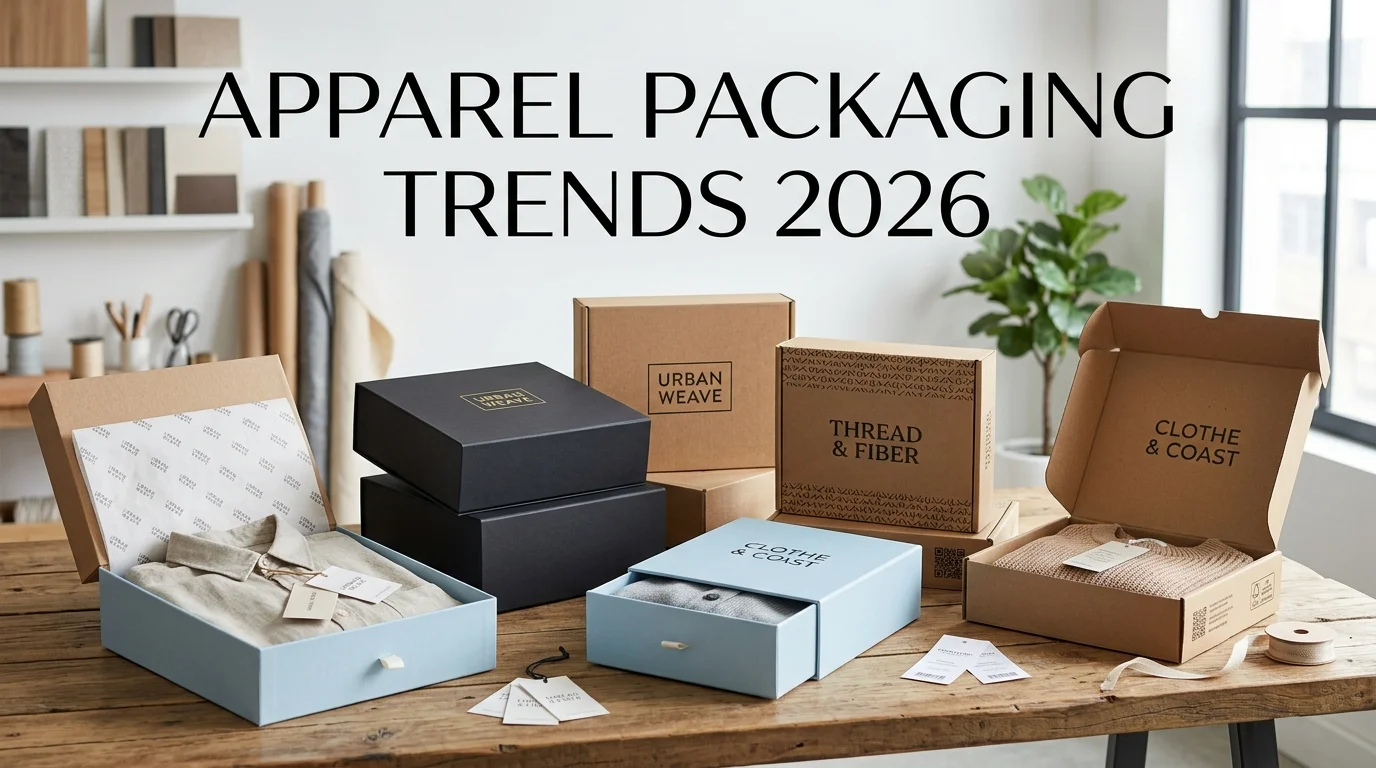
Apparel Packaging Trends 2026: What Every Clothing Brand Should Know
August 25, 2026 Explore Blogs
In 2026, packaging regards apparel not merely as a measure to protect merchandise; now it is an effective means of personification, a chance to establish a meaningful connection with the customers, and the best way to leave a message about environmental friendliness.
Because consumer awareness is on the rise, packaging has become an important touch point in the fashion business. The ways in which you approach packaging, such as using eco-friendly materials and new designs, may mean the difference between having a successful or not-so-successful brand.
This blog will explore the best apparel package trends of the year 2026 that require every clothing brand to pay attention to to remain relevant in the competitive world.
Sustainable Materials
The concept of sustainability remains a moving force in package design. Consumers are more and more searching for brands that focus on eco-friendly activities. By 2026, this tendency has already gained momentum, and there is a developing trend towards environmentally friendly materials, i.e., biodegradable and recyclable packaging and compostable materials.
Brands are abandoning single-use plastics and laying out alternatives such as paper-based packaging, plant-based films, and recycled materials. This not only lessens environmental impact but also coheres with consumer values, which leads to brand loyalty.
Eco-Friendly Materials Transform Packaging
In 2026, brands are using methods that break down their packaging (biodegradable), recycle the packaging, and compost the packaging material. Usage of paper and plant-based materials is more in place of single-use plastics.
This change is in line with the values of the consumers, lowers environmental impact, and enhances brand loyalty due to the incorporation of sustainable practices.
Consumers Demand Green Solutions
Contemporary consumers are more likely to make purchases in companies whose products have environmentally friendly packaging. Sustainable materials such as recycled paper and plant-based films help convey the responsibility, which adds building trust and emotional connection.
Apparel brands integrating these solutions, do not only save the planet but they can also maximize customer interaction and have a long-term impact on consumer loyalty.
Innovative Sustainable Packaging Trends
A focus on innovation characterizes the age of new packaging in terms of sustainability. Through compostable boxes to insert which are recyclable, companies are getting innovative with eco-friendly designs.
By incorporating these patterns, and determining how best to include them, apparel companies are not only able to demonstrate environmental responsibility, but also do so in a way that allows them to stay functional, stylish and satisfy consumers in items such as shoes, shirts, belts and others.
Balancing Aesthetics and Functionality
The packaging design in 2026 is minimalistic in some aspects, but at the same time, it is luxurious. Clean lines, neutral color palette and minimalist branding carry a high-end look that brand enthusiasts love.
Meanwhile, luxury brands are adding premium materials and textures like embossed logos, metallic foils and upscale textures to augment the unboxing experience, they say. This simplistic beauty to high-fashion balance satisfies all adventurous consumers with their different preferences.
- Clean Elegant Lines
- Neutral Color Palettes
- Subtle Branding Details
- Premium Texture Finishes
- Embossed Logo Accents
Interactive Packaging: Merging Technology with Tradition
Allowing a technology in the package is transforming the way consumers experience. Brands are starting to include QR codes, augmented reality (AR), and near-field communication (NFC) tags on their packaging to be used to access interactive content.
This can be hints on styling, backstage videos or loyalty rewards. Combining the physical domain of packaging with the digital one makes it possible to deliver a more tangible and customized experience to clients of the brands.
Technology Enhances Engagement
In 2026, brands will work on the use of QR codes, augmented reality and near field communications tags in apparel packaging.
These new developments make fixed package designs into something interactive, where styling tips, product information, as well as exclusive content can be presented, which makes the interaction between the two stronger and the memory more memorable.
Personalized Consumer Experiences
Interactive packaging allows brands to allow each customer to tailor experiences. A combination of digital components with an established design permits viewers to see behind-the-scenes material, incentivized rewards to denote a sense of loyalty, and personalized content that would play a part in improving customer satisfaction and the overall association with the brand in the context of cross-platform interactions.
Bridging Tradition and Innovation
The combination of old designing with contemporary technology in packaging is now established. Engaging smart features into those shoe, shirt or belt boxes, the brands do not lose their aesthetic quality but acquire the convenience of innovativeness, designing a seamless combination of tradition, comfort and convenience of modern consumers.
Creating Unique Experiences
It is also a revolution as engineering technology is finding its way into packaging, thereby giving consumers an entirely new experience. Companies are also using QR codes, augmented reality (AR), and near-field communication (NFC) tags that offer interactive information as part of their packaging.
This can be styling tips, behind-the-scenes video or loyalty rewards. By combining classic packaging with the online environment, brands make a more interesting and personal experience for the customers.
Tailored Packaging Solutions
By 2026, brands will connect QR codes, AR and NFC tags with apparel packaging. These additions turn stagnant packaging into an interactive experience, which provides styling advice, product information, and exclusive content, thus establishing a deeper engagement with the consumer, creating stronger ties that will not be forgotten whatsoever.
Direct-to-Consumer Advantages
Interactive packaging helps a brand in designing customized experiences for individual customers. By integrating online features into a more traditional product design, users will receive access to behind-the-scenes videos, customer loyalty points, and custom content, increasing levels of user satisfaction and strengthening brand awareness through interconnected experiences and individualized communication.
Memorable Brand Experiences
The new packaging combines old concepts with latest technology. By putting smart features into shoe boxes, shirt boxes, or even belt boxes, the brand does not compromise its aesthetic image and presents innovative functionality of a product, a perfect blend of tradition, convenience, and modern-day consumer comforts.
Creating Unique Experiences
Customized packaging is also becoming renowned as companies wish to make an impression by giving their customers memorable packaging. Customization, such as monogramming, personalized messages, and other specially designed products, makes customers feel special to the brand and more lovingly attached.
The latter is most common in direct-to-consumer (DTC) models, since brands can be fully involved in the packaging process through customizing it to meet unique customer demands.
Tailored Packaging Solutions
The current Brands in 2026 are paying attention to customized packaging of shoes, shirts, belts, and accessories. Individualized boxes with names, messages, or designs that make the brand create not only a good feeling afterward but also strong emotional bonds to the brand.
Direct-to-Consumer Advantages
DTC brands rely on customization to manage the packaging experience end to end. By simplifying things like unique designs or sold-out special packaging, companies are able to identify themselves differently, make their customers happier, and inspire customer loyalty with unique, memorable experiences with their products.
Memorable Brand Experiences
Customized wrapping overcomes boring product shipments to an exceptional brand experience. Aspirational and not cheap bulky tissues and personalized shoe or tie boxes create travellers and issues that show that attention to detail, branding and customer appreciation will get people coming back.
Packaging of Specific Items of Apparel
Various items of apparel have different packaging needs to protect them and present them in a certain way:
Shoe Boxes
Footwear packages are custom-designed not only to provide protection, but also to be used in branding. A full experience can be enhanced by the incorporation of innovative design and materials.
Tie Boxes
The elegant tie boxes can be provided with compartments and have soft interiors so as to prevent damage and showcase the quality of the product.
Shirt packaging
The pattern used in folding shirts and boxes creates minimum creases to ensure that the shirts come in the best condition, which will maximize customer satisfaction.
T-Shirt Packaging
Because t-shirts are lightweight, some of the more popular packaging options include recyclable poly mailer and a mix of both cost-effective and environmental sustainability.
Belt Boxes
Quality, sturdy and compact boxes including textured inserts that keep the belts molded and send a message of quality and care.
E-Commerce Packaging: Adapting to Online Shopping Trends
E-commerce packaging is an important part of the customer journey as online shopping is trending upwards. Packaging should not only keep the product safe during the transportation process, but it should also portray the brand image.
Brands are also responding by purchasing branded mailers, custom tissue paper and protective inserts to ensure products arrive safely and create a positive first impression when our customers receive them.
Protecting Products During Transit
Ecommerce packaging should focus on making it extra tough so that clothing products such as shoes, shirts, belts and t-shirts come safely.
Strength is enhanced through the use of protective bubble-pack, heavier boxes with reinforced corners, and even tough mailing tubes that keep goods in perfect form when they get to their destination.
Branding Through Packaging
E-commerce sellers are using packaging as a marketing element. The use of tissue paper, printed mailers, and custom-designed boxes communicates brand identity and makes opening the box an unforgettable experience that helps maintain top-of-mind brand recognition and customer loyalty and helps drive a sense of value and perceived value in a competitive internet-based market.
Enhancing Customer Impressions
Online shopping: first impressions count. Tastefully packaged e-commerce packaging is a fusion of both functionality and aestheticism, which ensures that products reach the intended destination safely and that the customer is pleased by the packaging.
Engaging insights, perfectly rubber-stamped inserts, precise folding, and protective solutions create an experience that transforms each delivery into a positive engagement opportunity.
Enhancing Functionality and Engagement With Smart Packaging
Smart clothing packaging products are becoming popular in the clothing industry. Applications such as RFID tags and smart labels allow brands to assist distributors in tracking stocks, authenticate items, and give the consumer extra data via the use of a mobile app. The technology supplements the utility of packaging and provides the option of increased customer interaction.
Integrating Technology for Tracking
Smart packaging uses RFID tags and smart labels to manage inventory levels, authenticate clothing, and provide efficiencies during the supply chain. The technology promises proper management of stocks, curbing counterfeits, and enhancing efficiency in the operation of brands in the apparel industry.
Engaging Consumers Digitally
By integrating packaging into mobile applications or even online platforms, the brands provide consumers with interactive experiences. Customers are able to see the details of a product, including care/cleaning instructions or other exclusive material, also creating a more direct, interesting, and personal response to shoes, shirts, belts, and other apparel items.
Enhancing Packaging Functionality
Besides beauty, smart packaging advances usability and delivers information. These include tamper-evident labels, embedded NFC chips, and other developments that are providing convenience not only to customers but also verification of authenticity and an added element of value to these goods in a competitive marketplace.
Global Packaging Standards and Regulations
The world is moving towards sustainability, thus making the packaging laws more restrictive. Global packaging laws and regulations should be followed by brands so that they remain updated. This involves being aware of the labeling required in various markets, restrictions on materials in use, and recycling specifications.
Navigating International Compliance
Apparel companies should keep in touch with the regulations of global packaging. Learning the rules regarding the prohibited material types and labeling requirements, as well as recycling mandates, this way allows the products to be compliant with the international product creation standards and prevents the brand from being picked up in the legal field and, at the same time, fosters a responsible and sustainable process across the vastly different markets.
Meeting Sustainability Requirements
With the adoption of sustainability as a global concern, packaging needs to match the aspects of being environmentally friendly. The use of certified materials, recyclable components, and transparent labeling will show that the company is eco-friendly and eco-conscious, and this process will build consumer trust and position the company as a world-leading organization in the apparel industry.
Standardizing Across Markets
Global brands require consistent packaging strategies that fit the needs of the region. Customizing boxes to fit shoes, shirts, belts, and accessories to meet diverse demands across different countries and jurisdictions ensures seamless market penetration, logistical nightmares, and a uniform global brand quality.
Conclusion
In 2026, the apparel packaging environment is one that embraces an equal combination of green technologies, technology, and customization. With these trends at your fingertips, you can improve how customers feel about your brand by optimizing your packing strategies to create an engaging customer experience, establish customer loyalty, and command attention in a competitive market.
CustomPrintedPaper focuses on custom packaging solutions with tailored design options to support your brand’s personality and standards. Be mindful of these trends to make sure you not only have your products safe in their packaging but also that your packaging tells the story of your brand.
Also Read: The 7 Best Packaging Trends For Wholesale Rigid Boxes