



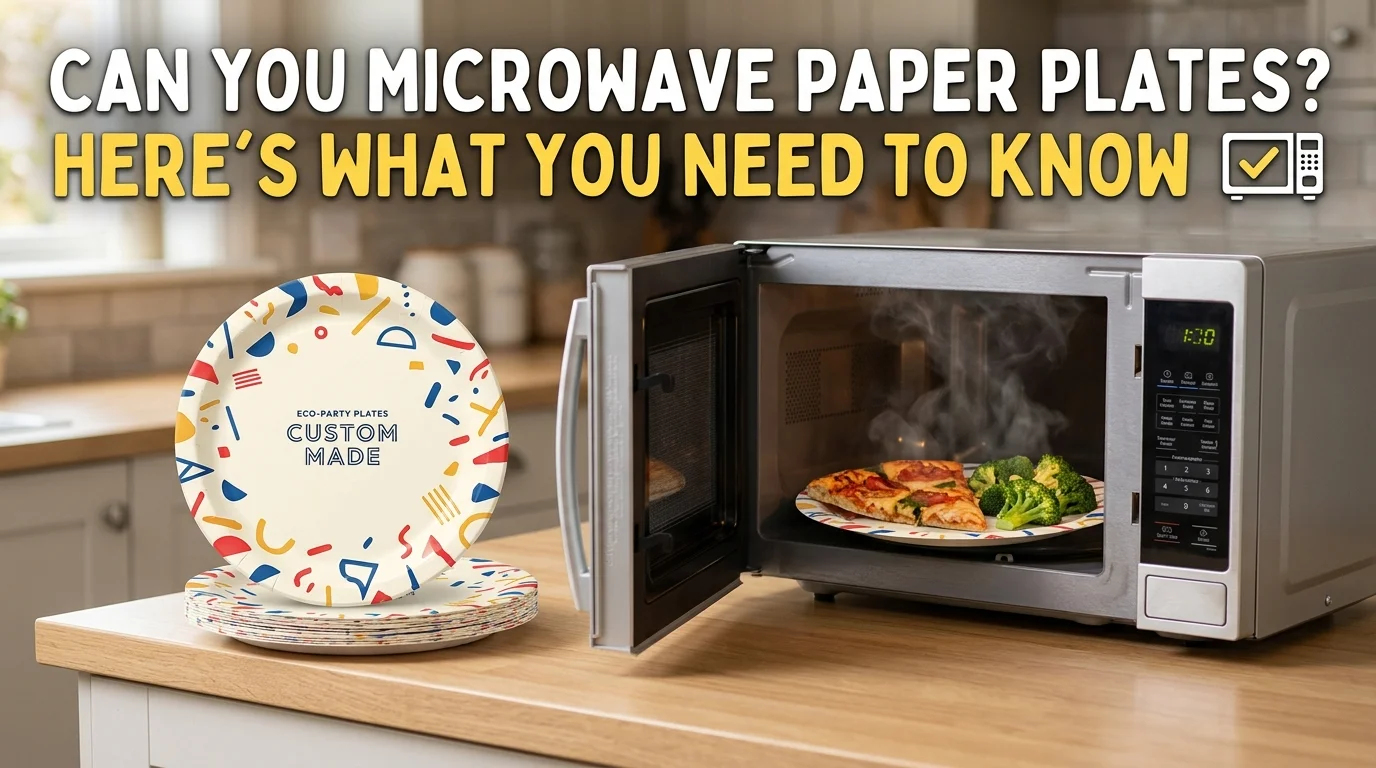
Can You Microwave Paper Plates? Here’s What You Need to Know
September 1, 2026 Explore Blogs
Quick Answer
Can you microwave paper plates? Many paper plates can be microwaved for reheating. However, not every plate is built the same way. Whether it’s safe depends on the plate’s material, coating, printing, and what the manufacturer says on the package. The USDA notes that most paper plates, towels, and bags can go in the microwave. It also recommends white, unprinted materials for optimal safety. So always check the package first.
Can You Microwave Paper Plates?
So, can you microwave paper plates? In most cases, yes. But “most cases” is doing a lot of work in that sentence.
Plain, uncoated paper plates usually hold up fine for short reheating jobs. That’s because the paper itself doesn’t absorb microwave energy the way food does. Instead, it stays fairly cool while the food underneath heats up. This matches FDA guidance: microwaves pass through paper, glass, and certain plastics, while food absorbs the energy directly.
The tricky part is everything added to that paper. Dyes, coatings, adhesives, and decorative finishes all change how a plate behaves under heat. Therefore, the safest mindset isn’t “paper plates are fine” or “paper plates are risky.” It’s simply this: check the plate in front of you.
Are All Paper Plates Microwave-Safe?
No. This is the part many quick-answer articles skip. Paper plates aren’t one single product. Depending on the brand, a plate might be made from:
- Plain, uncoated paperboard
- Printed paper with food-safe inks
- Wax-coated or plastic-coated paper for grease resistance
- Molded fiber or bagasse (sugarcane fiber)
- Paper with metallic foil or metallic-look decoration
Each of these reacts differently to heat. A plain white plate and a foil-trimmed party plate aren’t the same product, at least not for microwave safety. Consumer Reports has pointed out that paper tableware can include components that change how it performs in a microwave. That’s exactly why blanket claims fall short here.
The rule of thumb is simple: don’t assume. Confirm.
How to Tell if a Paper Plate Is Microwave-Safe
Before microwaving any disposable plate, run through this quick check:
- Look for a microwave-safe symbol or statementon the package.
- Read the manufacturer’s instructions, if included.
- Check for metallic decoration or foil trim.Skip the microwave if you see any.
- Inspect the coating.A glossy or waxy finish may not handle microwave heat well.
- When unsure, transfer the foodto a glass or ceramic dish instead.
This check only takes a few seconds. Yet it removes most of the guesswork. It also matches what manufacturers say in their own FAQs. Check the label. Follow the instructions. And don’t assume every plate in the category behaves the same way.
What Does the Microwave-Safe Label Mean?
A “microwave-safe” label means the manufacturer tested the product for normal use. Under typical conditions, it won’t melt, warp, ignite, or release anything harmful into food. However, it doesn’t mean the plate can handle unlimited heat or long cook times.
Think of the label as a green light for typical reheating. That means a few minutes, moderate power, and normal portions. It isn’t a guarantee for every possible scenario. If a package has no microwave-safe label at all, treat that as a signal to use a different dish.
Can You Microwave Printed Paper Plates?
This is one of the most searched follow-up questions. It deserves a careful answer, not a flat yes or no.
Printed paper plates can be microwave-safe. But printing adds a variable: the ink and any coating used to apply it. Food-grade printing on a labeled, microwave-safe plate is usually fine for its intended use. Still, USDA guidance recommends white, unprinted paper products for optimal safety. That’s a useful default when you’re unsure how a plate was made.
The practical takeaway is simple. Printed doesn’t automatically mean unsafe. But it does mean you should check the label instead of guessing. This matters especially for custom foodservice buyers. A branded, printed paper plate made for an event isn’t automatically built for microwave use unless the manufacturer confirms it.
Can You Microwave Coated Paper Plates?
Coatings help paper plates resist grease, moisture, and sogginess. That’s usually a good thing for serving food. But coatings can complicate microwave use.
- Wax coatingscan melt or soften under heat. This may affect the plate’s structure and, in some cases, the food.
- Plastic-film coatingsvary widely. Some handle short reheating well; others don’t.
- Grease-resistant coatingsare often designed for cold or room-temperature use, not microwave heat.
If a coated plate doesn’t clearly say “microwave-safe,” don’t guess. Use a different container instead. For bulk orders, ask the manufacturer directly.
Can You Microwave Greasy or Saucy Foods on Paper Plates?
Greasy and saucy foods put more stress on a paper plate than dry foods do. There are two main reasons. First, fat can reach higher temperatures than water-based foods. This raises the risk of scorching the plate. Second, moisture softens paper fibers, especially near the edges. That makes the plate less sturdy while you’re carrying it.
If you’re reheating something greasy — pizza, bacon, fried food — try these tips:
- Use short heating intervals and check progress along the way.
- Place a paper towel under the food to absorb extra grease.
- Avoid loading the plate with liquid-heavy dishes like soup or stew.
- Choose glass or ceramic for anything very hot, oily, or saucy.
How Long Can You Microwave a Paper Plate?
There’s no single safe number of minutes for every plate. It depends on the food, the plate’s construction, and your microwave’s power. Still, a few good habits apply broadly:
- Heat in short intervals of 30 to 60 seconds. Check the plate between rounds.
- Avoid running a microwave-safe paper plate for more than a few minutes straight.
- Stop right away if you see warping, discoloration, smoke, or a burning smell.
Manufacturers usually design labeled plates around typical reheating times, not extended cooking. So if a recipe calls for several minutes of continuous heat, skip the paper plate. Reach for glass or ceramic instead.
Can Paper Plates Catch Fire in a Microwave?
Technically, yes. Paper is combustible. If a plate is heated too long, it can scorch. The same goes for metallic trim, or use beyond its intended purpose. USDA guidance specifically warns against microwaving brown paper bags, newspaper, and metal. That’s a helpful reminder: “paper” doesn’t automatically mean “microwave-safe.”
The real-world risk is low for a properly labeled, plain paper plate used briefly. However, the risk climbs with decorative foil, longer cook times, and high-power microwaves. If a plate ever starts smoking, stop the microwave right away. Leave the door closed for a moment so heat can settle. Then let everything cool before touching it.
What Should You Never Put in a Microwave?
A few materials should stay out of the microwave completely:
- Metal pans, utensils, or foil-wrapped food
- Plates or packaging with metallic foil or metallic-look printing
- Brown paper bags and newspaper
- Any container not labeled microwave-safe
- Plates that are already damaged, warped, or breaking down
When in doubt, switch to glass or ceramic. Both are reliable, reusable choices for microwave heating.
Paper Plates vs. Glass and Ceramic
| Material | Microwave Suitability |
| Microwave-labeled paper plate | Follow the manufacturer’s instructions |
| Unlabeled or unknown paper plate | Don’t assume — use an alternative |
| Plate with metallic decoration or foil | Avoid entirely |
| Glass (microwave-safe) | Generally suitable |
| Ceramic (microwave-safe) | Generally suitable |
| Metal | Never microwave-safe |
Glass and ceramic have one big advantage: consistency. There’s no coating or printing variable to worry about. Paper plates, on the other hand, win on convenience, cleanup, and cost. That makes them great for parties, catering, and takeout. The best approach is knowing when to use each one. Choose labeled paper plates for quick, casual reheating. Choose glass or ceramic when you’re unsure, or when food is hot and greasy.
Are Compostable Paper Plates Microwave-Safe?
Not automatically. Compostable and molded-fiber plates, including bagasse (sugarcane fiber), are often marketed around disposal, not microwave performance. Some compostable lines are tested and labeled for reheating. Others are meant strictly for cold or room-temperature serving.
The same rule applies here as everywhere else in this guide. Compostable doesn’t automatically mean microwave-safe. And microwave-safe doesn’t automatically mean compostable. Check the package for both claims separately. Don’t assume one implies the other.
Safe Microwave Tips for Paper Plates
- Check the package for a microwave-safe label before heating anything.
- Stick to plain, unprinted, uncoated plates when you’re unsure.
- Avoid plates with foil trim or metallic ink.
- Use short heating intervals and check progress as you go.
- Watch for warping, smoke, or a burning smell. Stop right away if you notice any.
- Switch to glass or ceramic for greasy, saucy, or extended reheating.
- Let heated plates cool briefly before picking them up. Even “safe” plates can get warm from the food.
What Makes a Paper Plate Suitable for Microwave Use?
Suitability depends on the full product, not just the fact that it’s paper. A microwave-safe paper plate usually checks these boxes:
Is it labeled microwave-safe? → Yes: Follow the instructions. → No: Don’t assume it’s safe.
Does it have metallic decoration or foil? → Yes: Avoid the microwave entirely. → No: Move to the next check.
Is it warping, smoking, or breaking down during use? → Yes: Stop heating right away and switch containers.
This simple path works for almost any disposable plate. That includes plain, printed, coated, or compostable options.
Frequently Asked Questions
- Can you microwave paper plates?Many can, but only when the specific plate is labeled or intended for microwave use. Check the packaging first.
- Are paper plates microwave-safe?Some are, and some aren’t. It depends on the plate’s material, coating, and printing, not just the fact that it’s paper.
- Can you microwave disposable paper plates?Yes, if the plate is labeled microwave-safe. Treat unlabeled disposable plates with caution.
- How long can you microwave a paper plate?There’s no universal time limit. Use short intervals and follow the food’s heating instructions instead of a fixed number.
- Can paper plates catch fire in the microwave?It’s possible with extended heating, metallic decoration, or misuse. Still, the risk is low for properly labeled plates used briefly.
- Can you microwave printed paper plates?Only if the product is labeled microwave-safe. White, unprinted plates are generally the safer default.
- Can you microwave colored paper plates?Color isn’t the main concern. The ink and coating used to apply it are. Check the label instead of judging by appearance.
- Can you microwave coated paper plates?Some coated plates are microwave-safe, and others aren’t. Wax and plastic-film coatings can behave unpredictably if the product isn’t rated for heat.
- Can you microwave greasy food on paper plates?Yes, but use shorter intervals and check the plate often. For very oily or saucy dishes, consider glass or ceramic instead.
- Are white paper plates microwave-safe?White, unprinted plates are generally the safer default. Still, confirm with the manufacturer’s label.
- Are compostable paper plates microwave-safe?Not always. Compostability and microwave safety are separate claims. Check the package for both.
- Are bagasse plates microwave-safe?Many bagasse plates handle moderate heat well. Even so, confirm the specific product’s labeling first.
- Can you microwave paper bowls?The same rules apply as plates. Check for a microwave-safe label, avoid metallic decoration, and use short intervals.
- What does the microwave-safe symbol mean?It shows the manufacturer tested the product for typical reheating conditions, not unlimited heat or extended cook times.
- What should you do if a paper plate starts smoking?Stop the microwave right away. Keep the door closed briefly so heat can settle. Let everything cool before handling it.
- Can you microwave a paper plate with foil trim?No. Metallic foil and metallic-look decoration should never go in a microwave.
- Is glass safer than a paper plate for microwaving?Glass and ceramic remove the coating and printing variables entirely. That makes them a reliable choice when you’re unsure about a paper plate.
- Can you reuse a paper plate after microwaving?Generally, no. Paper plates are built for single use, and heat can weaken the material further.
- Can custom paper plates be made microwave-safe?Yes, with the right food-safe inks, materials, and construction. Ask your supplier for microwave-use specifications.
- Where can I buy microwave-safe paper plates?Look for suppliers that clearly label microwave suitability on their product specs, including foodservice and custom paper plate providers.
Looking for Custom Paper Plates?
If you’re sourcing paper plates for a restaurant, café, catering business, or event brand, the same rules apply at scale. Construction and labeling matter more than the fact that a product is “paper.”
Need custom paper plates for your brand? Create custom-printed paper plates with the materials, sizes, and specs your business needs. Ask directly about microwave-use suitability before ordering in bulk.
Not sure which paper plate material fits your application? Tell us how your plates will be used. We’ll help you find the right specifications for your foodservice or event needs.
The Bottom Line
So, can you microwave paper plates? Often, yes. But the safest answer always comes back to the specific plate in your hand. Check the label. Watch for metallic decoration. Keep heating times short. And switch to glass or ceramic whenever you’re unsure. That one habit covers nearly every scenario in this guide.