


Is Freezer Paper the Same as Parchment Paper?
September 28, 2026 Explore Blogs
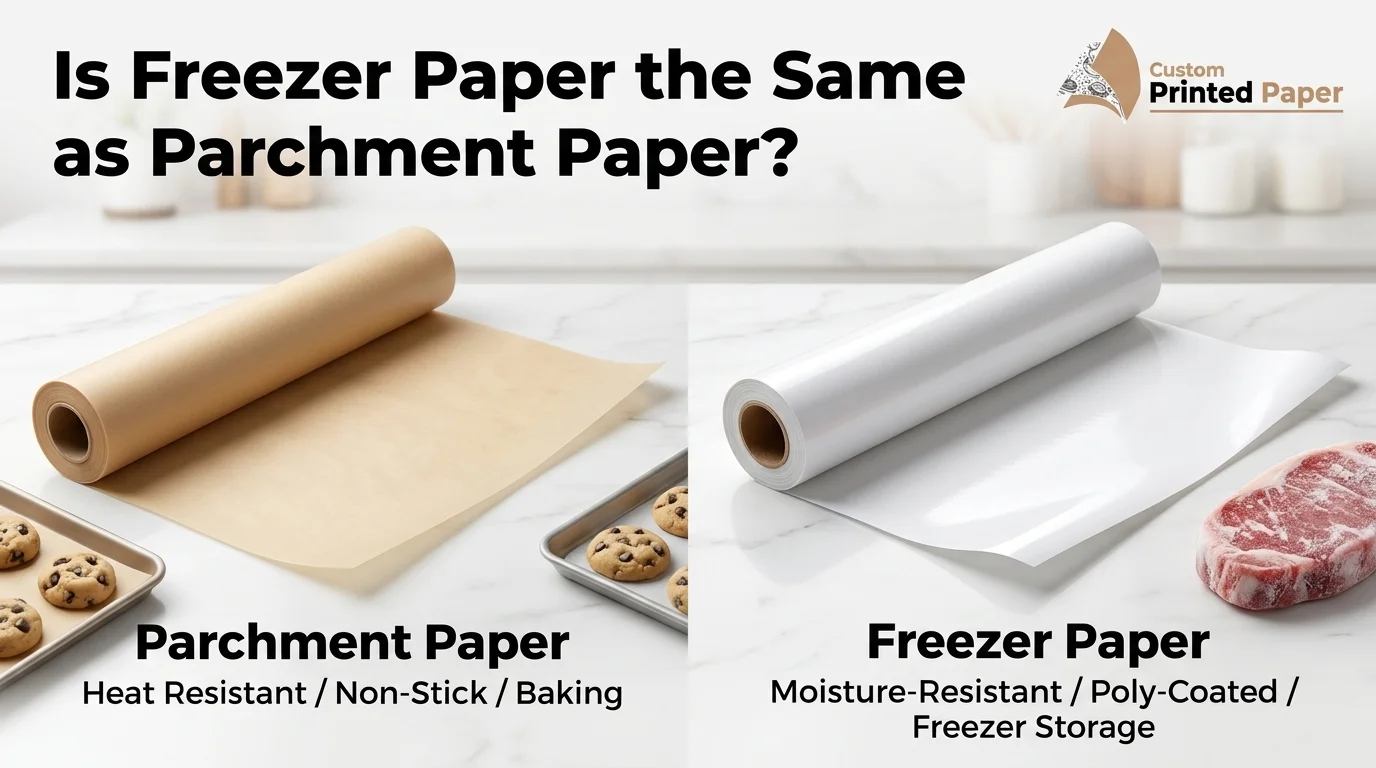
No. Freezer paper and parchment paper are different food papers. Freezer paper is made mainly for frozen-food storage. Parchment paper, usually called baking paper in Australia, is made for baking and cooking.
The two look similar at first glance. Both are thin, food-safe sheets. But their coatings decide where each one works. Swap them carelessly and you could end up with melted plastic in your oven, or a steak covered in freezer burn.
This guide explains the difference, when one can stand in for the other, and what food businesses should consider when choosing paper.
What Is Freezer Paper?
Freezer paper is paper with a thin plastic coating on one side. The USDA’s Food Safety and Inspection Service describes it as white paper coated on one side with plastic. That coating acts as a moisture barrier and helps keep air away from the food.
Air matters because it causes freezer burn. Freezer burn happens when air reaches the surface of frozen food and dries it out. It is a quality issue, not a safety one, but it leaves meat tough and dull.
Most people use freezer paper for freezer paper for meat, poultry and fish. The plastic-coated side goes against the food. The paper side faces out, so you can write the date and cut on it with a marker. Reynolds, a major manufacturer, gives the same instructions.
Keep in mind that freezer paper is not a perfect seal. Fold the edges tightly and tape them shut. For longer storage, add an outer freezer bag.
What Is Parchment Paper?
Parchment paper is a heat-resistant paper with a non-stick surface. It is usually treated with silicone, though products vary. Bakers use it to line trays, stop cookies sticking and wrap food for roasting.
Australians rarely say “parchment paper” in the kitchen. The everyday name here is baking paper, and Australian packaging suppliers use both terms for the same product. So if you search for baking paper vs freezer paper, you are asking the same question.
Bakeries and cafés often want their branding on this paper. Some suppliers offer custom parchment paper for exactly that.
Freezer Paper vs Parchment Paper: What’s the Difference?
Here are the main differences between freezer paper vs parchment paper:
- Purpose: Freezer paper is for cold storage. Parchment paper is for baking and cooking.
- Coating: Freezer paper has a plastic coating. Parchment paper has a non-stick treatment, often silicone.
- Heat: Freezer paper is not designed for ovens. Parchment paper is made for oven use.
- Moisture resistance: Freezer paper is built to hold moisture in and air out. Parchment paper is built to release food, not to seal it.
- Typical uses: Freezer paper suits wrapping meat and fish. Parchment paper suits lining trays and baking.
A simple way to remember it: freezer paper protects food in the cold, and parchment paper helps food cook in the heat. That is why freezer paper and parchment paper are not direct substitutes for every job.
Can You Use Parchment Paper for Freezing?
Yes, in some situations. Parchment paper can be used with frozen food, but it is not the best choice for long-term storage. It has no plastic barrier, so air can reach the food more easily. Wrap it tightly and add a freezer bag or container.
The USDA lists parchment among the food-grade materials that can be used for freezing. So the blunt claim that parchment “can’t go in the freezer” is not accurate. The real question is how well it protects the food.
Parchment is handy for short-term jobs:
- Separating burger patties or rissoles
- Layering biscuits or slices in a tub
- Wrapping a sandwich or a portion of baked goods
For a whole roast or a month-long freezer stash, parchment paper for freezing works best as an inner layer, not the only one. If you need can parchment paper replace freezer paper to be a “yes”, pair it with an airtight outer wrap.
Can Freezer Paper Go in the Oven?
No. Do not put freezer paper in the oven unless the manufacturer clearly says it is oven-safe. Most freezer papers have a plastic coating that is not made for oven heat.
Food-safe does not mean heat-safe. Freezer paper is safe for food contact in the freezer. That says nothing about how it handles 180°C. Reynolds specifically warns against oven use for its freezer paper.
If you are unsure, check the packaging. If the pack gives no oven rating, reach for baking paper instead.
Freezer Paper vs Parchment Paper vs Wax Paper
Wax paper adds to the confusion. It is coated with wax rather than plastic or silicone. It works for separating cold foods, but wax can melt or smoke with heat, so it does not belong in the oven either. It is also not designed as a freezer barrier.
Butcher paper is different again. It is often breathable, which suits some fresh-meat wrapping but does not give the moisture protection of coated freezer paper.
In short, each paper is built for one main job. Choose by the job, not by how the sheet looks.
Which Paper Should You Use?
- Freezing meat or fish: Freezer paper, plastic side against the food.
- Baking cookies or lining trays: Parchment (baking) paper.
- Roasting vegetables or fish parcels: Parchment (baking) paper.
- Separating frozen patties: Either, though parchment is easier to peel.
- Long-term frozen storage: Freezer paper, plus an outer bag or container.
- Commercial wrapping: Choose by food type, coating and how the product will be stored or served.
Freezer Paper for Food Packaging
Butchers, delis, restaurants, food manufacturers and retailers face the same choice, just at a larger scale. The right paper depends on the coating, moisture resistance, sheet or roll format, and how the product will be stored.
A butcher wrapping cuts for a customer’s freezer needs a moisture barrier. A bakery packing pastries needs a paper that handles grease and looks good on the counter. Getting the coating wrong costs money in spoiled or poorly presented product.
Branding is another factor. Printed paper turns everyday wrapping into a small marketing tool. If you are sourcing custom freezer paper for frozen or chilled products, look for a supplier who can advise on coating and print together.
Looking for branded packaging? Explore custom food wrapping paper options for your business.
Frequently Asked Questions
Is freezer paper the same as parchment paper?
No. Freezer paper has a plastic coating for cold storage. Parchment paper has a non-stick treatment for baking.
Can parchment paper be used in the freezer?
Yes, for short-term or inner-layer use. For long storage, wrap it tightly and add an airtight outer layer.
Can freezer paper go in the oven?
No, not unless the manufacturer states it is oven-safe. The plastic coating is not designed for oven heat.
Is baking paper the same as parchment paper?
In Australia, yes. Baking paper is the common local name for parchment paper.
What is freezer paper used for?
It is used to wrap meat, poultry, fish and other foods for freezer storage. The coating helps reduce air and moisture loss.
Does freezer paper prevent freezer burn?
It helps by limiting air contact, but it is not a perfect seal. Wrap tightly and tape the edges.
Can parchment paper replace freezer paper?
Only for short-term freezing. It lacks the moisture barrier that makes freezer paper better for longer storage.
What is the difference between freezer paper and wax paper?
Freezer paper has a plastic coating and suits freezing. Wax paper has a wax coating, is not oven-safe and is not a dedicated freezer barrier.
Conclusion
Freezer paper and parchment paper are not the same. One is built for the freezer, and the other for the oven. Parchment can help in some freezing jobs, but it is not a direct replacement for freezer paper. Always check the manufacturer’s instructions for oven limits.
For home cooks, the choice is simple: freezer paper for freezing, baking paper for baking. Food businesses have more to weigh, from coating to printing. If you are ready to look at options, start with custom parchment paper for baked goods or custom freezer paper for frozen and fresh products.