




How to Wrap Flowers in Brown Paper: A Simple Step-by-Step Guide
October 15, 2026 Explore Blogs
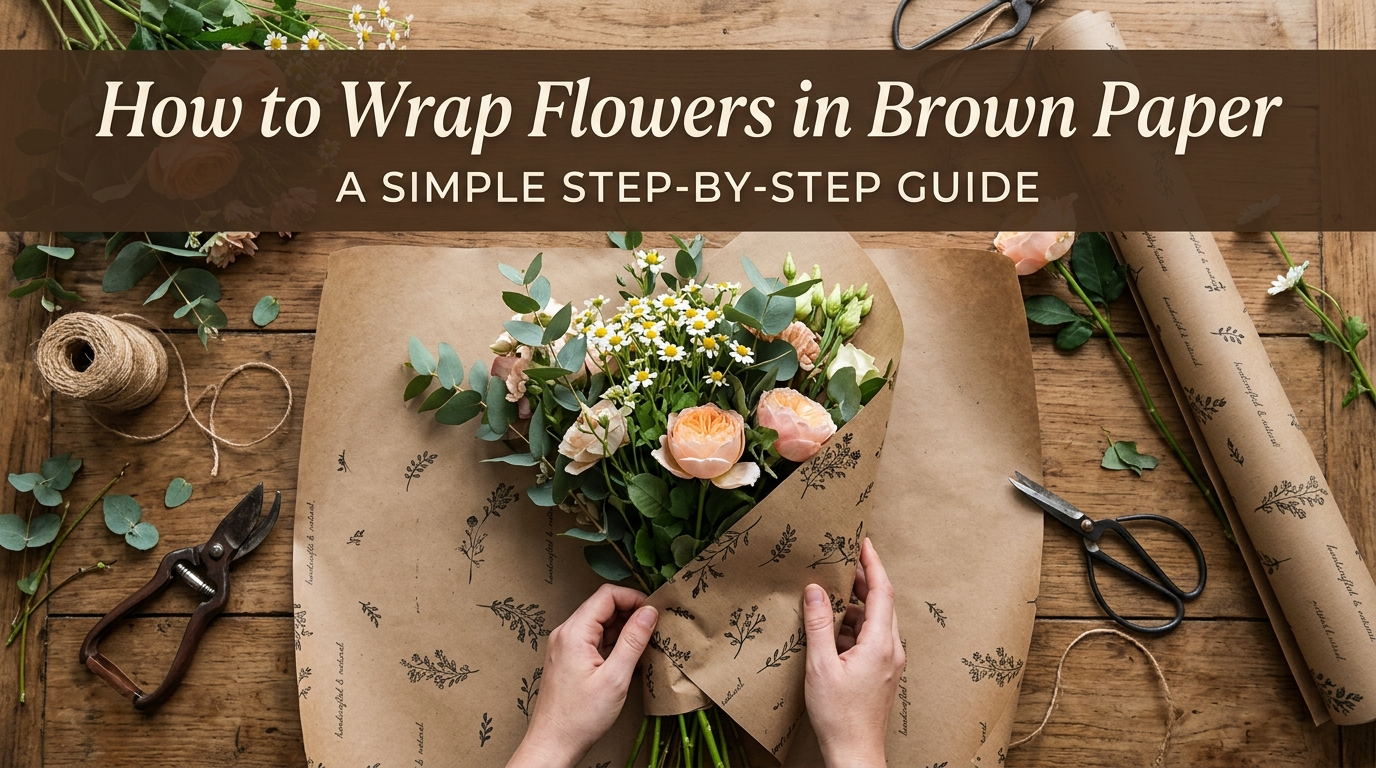
Learning how to wrap flowers in brown paper takes about five minutes and costs very little. All you need is a sheet of kraft paper, scissors, and some twine. The result looks natural, handmade, and thoughtful.
Here is the quick version:
- Prepare and arrange the flowers.
- Cut a sheet of brown kraft paper.
- Place the bouquet diagonally on the paper.
- Fold one side over the stems.
- Fold the other side over to form a cone.
- Secure the wrap with ribbon or twine.
If your stems are wet, protect the paper with a separate leak-resistant sleeve. Otherwise, the water will soak through the wrap. This guide explains each step in detail. You will also learn how to choose the right paper, wrap a single rose, and fix common mistakes.
Why Brown Kraft Paper Is a Good Choice for Flower Wrapping
Brown kraft paper flower wrapping has a warm, rustic look that suits almost any bloom. The neutral color makes greens, pinks, and yellows stand out. The paper is also affordable, and it folds easily into a cone.
However, kraft paper has limits. Plain kraft is not waterproof, so wet stems can ruin it. It can also tear if you crease it too sharply. Both problems are easy to avoid, and we cover them below.
Brown paper works well for gifts, farmers’ market bunches, and everyday bouquets. You can dress it up with ribbon, a handwritten tag, or a sprig of greenery. In short, it is simple, flexible, and forgiving for beginners.
What You Need to Wrap Flowers in Brown Paper
Gather everything before you start. That way, the paper will not crease while you look for your scissors.
- Brown kraft paper: one sheet per bouquet. Pre-cut kraft wrapping paper sheets save time.
- Sharp scissors or floral shears: for trimming stems and cutting paper.
- Twine, raffia, or ribbon: to tie the wrap.
- A rubber band: to hold the stems together while you work.
- Hydration supplies (optional): a damp paper towel and a small bag, or water tubes.
- Extras (optional): floral tissue paper, a gift tag, and a pen.
How much paper do you need?
Use paper about 2.5 times the height of your bouquet, as suggested by the florist guide at Local Flower. For example, a 12-inch bouquet needs a sheet about 30 inches long. Local Flower also lists 18 by 24 inches for small bouquets and 24 by 36 inches for large ones. Treat these sizes as starting points, and test one sheet first.
| Bouquet size | Paper starting point |
|---|---|
| Small | About 18 by 24 inches |
| Large | About 24 by 36 inches |
| Any size | About 2.5 times the bouquet height |
How to Wrap Flowers in Brown Paper Step by Step
Follow these five stages in order. Each one builds on the last.
Step 1: Prepare the bouquet
Trim the stems to the length you want. Most hand-held bouquets look best with stems around 10 to 14 inches, according to Local Flower. Next, strip the leaves from the lower stems. Leaves below the tie point crowd the wrap and can rot. Then arrange the flowers in a spiral so the stems cross at one point. Hold that point firmly and secure it with a rubber band.
Step 2: Measure and cut the paper
Cut the paper to about 2.5 times the bouquet height. A longer sheet is safer than a short one, because you can trim extra paper later. Lay the sheet flat and smooth out any wrinkles. Wrinkles show clearly on the finished wrap.
Step 3: Position the flowers diagonally
Turn the sheet so it looks like a diamond, with one corner pointing toward you. Lay the bouquet across the middle on a diagonal. The flower heads should sit above the top corner. The stems should point toward the bottom corner.
Step 4: Fold both sides into a cone
Fold the right corner over the stems and tuck it in snugly. Then fold the left corner over to meet it. Let the two edges overlap slightly. The paper should now form a cone that frames the blooms. Keep your folds firm but gentle, because pressing too hard can crush petals.
Step 5: Secure the paper and add ribbon
Hold the cone at the binding point. Wrap twine or ribbon around it two or three times. Pull it snug, then tie a bow or a simple knot. Make sure the ribbon covers the rubber band. Finally, check the wrap from the front and the side, and adjust any loose folds.
How to Wrap Different Types of Bouquets
The same basic method works for every size. However, small changes help each bouquet look its best.
How to wrap a single rose in brown paper
A single rose needs a slim cone. Cut a smaller piece of kraft paper, and lay the rose on the diagonal. Fold one side over the stem, then fold the other side over it. Leave the flower head visible. Tie the wrap with thin ribbon or twine, and add a small tag if you like.
How to wrap a small bouquet
Small bouquets need only one layer of paper. Start with a sheet near 18 by 24 inches. Keep the cone loose enough for the blooms to breathe. For a softer look, tuck a sheet of tissue paper inside the cone before you fold.
How to wrap a large bouquet
Large bouquets need more paper and more support. Start with a sheet near 24 by 36 inches. Fold the sides slowly so the paper does not tear. If the bouquet feels heavy, tie the ribbon twice, once at the binding point and once a little lower.
How to Keep Flower Stems from Making Paper Wet
Fresh flowers need water, but wet stems can soak through plain kraft paper. A separate barrier solves the problem. Try one of these methods:
- Damp paper towel: wrap a damp towel around the cut stem ends, then cover it with plastic wrap so nothing drips.
- Water tubes: use a small tube on each stem, especially for long trips.
- Good timing: wrap the bouquet as close to gifting time as you can, and keep it cool and out of direct sun.
Do not seal the bottom of the wrap tightly. Sealed stems can rot, as Local Flower points out. Also remember that wrapping is for presentation and short trips. Put the flowers in clean water as soon as you arrive.
Creative Brown Paper Flower-Wrapping Ideas
Brown paper is a blank canvas. These ideas add personality without extra effort.
Rustic and minimalist
Plain kraft with jute twine is hard to beat. It pairs well with sunflowers, daisies, and wildflowers. Keep the folds clean and let the flowers do the talking.
Kraft paper with tissue
Layer one or two sheets of tissue inside the kraft cone. White or soft pink adds a gentle contrast. Crinkle the tissue first for extra texture.
Ribbon and gift tags
Satin ribbon gives a classic finish. Grosgrain is more textured and holds knots well. Raffia or jute suits a rustic bunch. Add a handwritten tag to make the gift personal. For more inspiration, browse these gift packaging ideas.
Custom-printed wraps
Florists and event planners can add a logo or message to the paper itself. Custom-printed kraft paper gives every bouquet a branded, professional look, and it still keeps the natural brown feel.
How to Choose the Right Kraft Paper
Not all brown paper behaves the same way. Compare these options before you buy:
| Paper type | Best for | Watch out for |
|---|---|---|
| Plain kraft | Everyday DIY bouquets | Not waterproof, and it tears when wet |
| Heavier kraft | Large or heavy bouquets | Stiffer to fold |
| Coated kraft | Extra moisture resistance | May not be accepted for recycling, so check local rules |
| Tissue-lined kraft | A soft look for delicate flowers | Needs two layers |
Think about paper weight, too. Heavier paper holds a cone shape better, while thin paper folds easily but tears faster. Shops that wrap bouquets often can compare paper packaging options by sheet size, roll format, and print needs.
Common Flower-Wrapping Mistakes and How to Fix Them
- Crushing the blooms: a wrap that is too tight damages petals. Leave room for the flowers to breathe.
- Letting the paper slide: a loose wrap slips off. Tie it firmly at the binding point.
- Guessing the paper size: too little paper looks skimpy, and too much hides the flowers. Follow the 2.5 times rule.
- Showing the rubber band or tape: cover it with ribbon or twine.
- Tearing the folds: crease gently, and practice on a scrap sheet first.
- Skipping the final check: look at the wrap from the front and the side before you hand it over.
Frequently Asked Questions
How do you wrap flowers in brown paper?
Place the bouquet diagonally on a sheet of kraft paper. Fold one side over the stems, then overlap the other side to form a cone. Secure the wrap with ribbon or twine. Keep wet stems inside a separate sleeve so the paper stays dry.
What kind of brown paper is best for wrapping flowers?
Flexible kraft paper works well for everyday bouquets. Choose a weight that suits the bouquet size, because heavier sheets suit large bunches. If the stems are wet, add a moisture barrier, since plain kraft paper is not waterproof.
How much paper do I need for a bouquet?
Aim for about 2.5 times the bouquet height, with room for overlapping folds. Local Flower lists 18 by 24 inches for small bouquets and 24 by 36 inches for large ones. Test one sheet before you cut several.
Can I wrap flowers in brown paper without tape?
Yes. Overlap the folds and hold them with twine, ribbon, or a paper band. The result depends on the paper’s stiffness and the bouquet’s shape. Stiffer paper holds its form better without tape.
How do I keep brown paper from getting wet?
Enclose the cut stem ends in a leak-resistant sleeve, such as a damp towel inside plastic wrap. Make sure no water can escape onto the paper. Remember that plain kraft paper is not waterproof.
Can I wrap flowers in brown paper overnight?
You can, but wrapping does not keep flowers hydrated. Wrap as close to gifting time as possible. If you must wrap early, use water tubes, keep the bouquet cool, and avoid sealing the bottom tightly.
Can brown kraft paper be recycled after wrapping flowers?
It depends on the paper’s condition and finish. Clean, uncoated paper is more likely to be accepted, while wet, soiled, or coated paper may not be. In 2018, the EPA reported a 68.2% recycling rate for paper and paperboard overall, and 80.9% for paper packaging. Those figures do not cover flower wrap specifically, so check your local rules. You can also read more about paper packaging and recycling.
Is brown kraft paper suitable for flower shops?
Yes, for many everyday bouquets. Shops should weigh strength, wrapping speed, moisture exposure, and branding needs. Printed paper can add a logo while keeping the natural look.
Final Tips for a Beautifully Wrapped Bouquet
- Wrap on a clean, flat surface.
- Practice once with a scrap sheet.
- Keep the flowers as the star, and let the paper frame them.
- Match the ribbon width to the bouquet size.
- Wrap as close to giving time as possible.
Conclusion
Now you know how to wrap flowers in brown paper with confidence. Prepare the stems, cut the right size of paper, fold a neat cone, and tie it securely. Protect the paper from wet stems, and the bouquet will look polished from start to finish. With a little practice, each wrap will get faster and neater.
Ready for your next bouquet? Explore kraft wrapping paper for everyday wraps. Need branding? Request a custom printing quote for your own printed paper.
Related Blog: Paper Weight Guide: What Does GSM Mean and How Do You Choose the Right Thickness?