





Paper Weight Guide: What Does GSM Mean and How Do You Choose the Right Thickness?
August 31, 2026 Explore Blogs
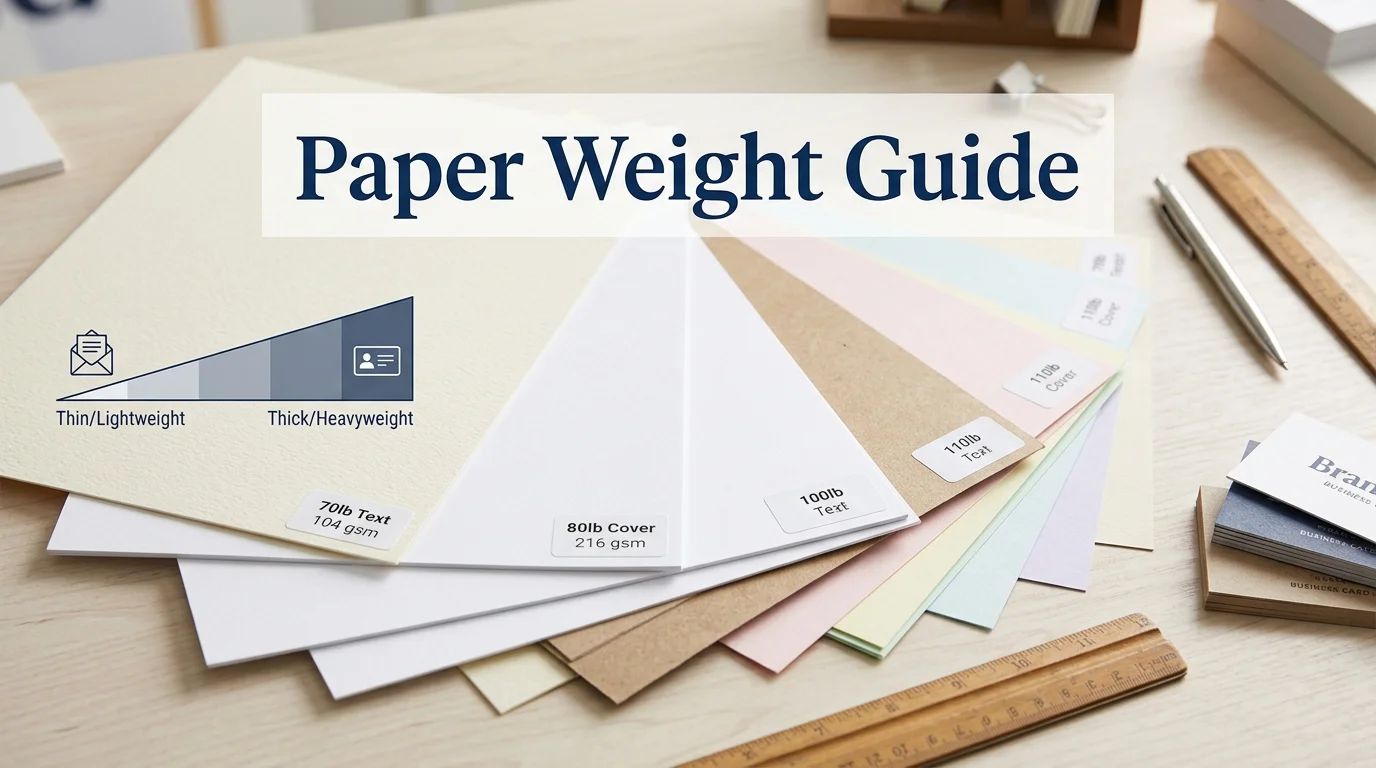
If you’ve ever shopped for paper and felt lost between numbers like “24 lb,” “80 lb cover,” or “300 GSM,” you’re not alone. Paper weight is one of the most misunderstood specs in printing, yet it directly affects how a finished project looks, feels, and performs. This paper weight guide walks through what paper weight actually measures, what does GSM mean on paper, how to read a paper weight chart, and how paper thickness ties into your final decision whether you’re printing business cards, invitations, brochures, or everyday documents.
What Is Paper Weight and Why Does It Matter?
Paper weight refers to how heavy a sheet of paper is, and that weight has a direct relationship with how sturdy, opaque, and premium the paper feels in hand. A flimsy sheet of copy paper and a rigid invitation card are both “paper,” but their weight and therefore their performance couldn’t be more different.
Getting the weight right matters because it affects printing quality, how the paper handles folding or feeding through a printer, whether ink bleeds through to the other side, and the overall impression your finished piece makes. A heavier, thicker sheet reads as more premium and durable, while a lighter sheet is more economical and better suited to high-volume, everyday printing.
Two systems dominate how paper weight is measured and labeled: GSM and pounds (lb). Understanding both and how they relate to each other — is the foundation of choosing the right stock for any project.
What Does GSM Mean on Paper?
GSM stands for grams per square meter. It’s a metric measurement that tells you exactly how much a single square meter of that paper weighs, regardless of the sheet’s final trimmed size. Because it’s tied to a fixed unit of area, GSM gives a consistent, apples-to-apples way to compare paper weight across categories office paper, cardstock, cover stock, you name it.
This consistency is what makes GSM the preferred measurement for designers and printers working internationally, since it removes the guesswork that comes with regional labeling systems. A higher GSM number always means a heavier, generally thicker sheet, no exceptions.
Understanding the Pound (LB) System
In the United States, paper weight is more commonly labeled in pounds. This system measures the weight of 500 sheets of the paper in its uncut, parent-size format and that parent size varies depending on the paper category, such as bond, text, or cover stock.
This is exactly why the lb system causes confusion: two different paper types can share the same pound rating but feel completely different in thickness. An 80 lb text-weight sheet, for instance, is noticeably thinner than an 80 lb cover-weight sheet, even though the number “80” appears on both labels. The lb rating only makes sense relative to its paper category, which is a key limitation compared to GSM.
Paper Weight Chart: GSM vs LB at a Glance
A reliable paper weight chart makes it much easier to translate between the two systems and pick the correct stock for your project.
| Paper Type | Approximate GSM | Common LB Equivalent | Typical Use |
| Standard copy paper | 75–90 GSM | 20–24 lb Bond | Everyday office printing |
| Premium writing paper | 90–120 GSM | 24–32 lb Bond | Letterheads, professional docs |
| Light cardstock | 120–170 GSM | 80–100 lb Text | Flyers, brochures |
| Standard cardstock | 200–270 GSM | 65–100 lb Cover | Business cards, postcards |
| Heavy cardstock | 300–350 GSM | 100–130 lb Cover | Invitations, premium cards |
As a general rule, the higher the GSM or lb figure within its own category, the thicker and more substantial the sheet will feel.
Paper Thickness vs Paper Weight: What’s the Difference?
Weight and thickness are related but not identical. Weight (GSM or lb) tells you how much the paper weighs; thickness is a separate physical measurement, typically expressed in points or mils, referring to the actual caliper of the sheet. Two papers can share a similar weight yet have slightly different thickness depending on the fibers, coatings, and manufacturing process used.
In practice, though, weight and thickness move together closely enough that most buyers use GSM or lb as a reliable shorthand for how thick a paper will feel. Heavier paper tends to resist bending, folding creases less visibly at the wrong spot, and holds ink more crisply than a lightweight sheet.
How Paper Weight Affects Print Performance
Choosing the right weight isn’t just about feel — it changes how your project actually performs:
- Thicker, heavier paper feels premium, resists show-through, and is the go-to choice for business cards, invitations, and brochures that need to make a strong first impression.
- Lighter paper is more flexible and economical, making it ideal for internal documents, everyday letters, and high-volume print runs where cost and paper flow through equipment matter more than rigidity.
- Ink appearance improves noticeably on heavier stock, since thicker sheets minimize smudging, reduce bleed-through, and let colors appear sharper and more saturated.
Choosing the Right Paper Weight for Your Project
Here’s a simple way to match paper weight to common projects:
- Everyday printing and internal memos — 20–24 lb Bond (75–90 GSM)
- Professional letterheads and documents — 24–32 lb Bond (90–120 GSM)
- Brochures and flyers — 80–100 lb Text (120–170 GSM)
- Invitations and greeting cards — 80–130 lb Cover (220–350 GSM)
- Business cards — 100–130 lb Cover (270+ GSM)
If you’re ever unsure, lean toward GSM when comparing options across different paper categories it’s the more consistent number and won’t mislead you the way a shared lb rating sometimes can.
Final Thoughts
Understanding paper weight and knowing how to translate between GSM and LB takes the guesswork out of choosing paper for any project, whether it’s a simple internal report or a premium wedding invitation. Once you know how to read a paper weight chart and recognize what paper thickness actually feels like at different GSM levels, picking the right stock becomes second nature.
Ready to bring your next print project to life? CustomPrintedPaper has the premium stock, expert guidance, and fast turnaround to match any paper weight to your exact needs. Get in touch with CustomPrintedPaper today and print with confidence.
Also read: What Is Flocking? The Complete Guide to Flocked Packaging for Small Businesses