







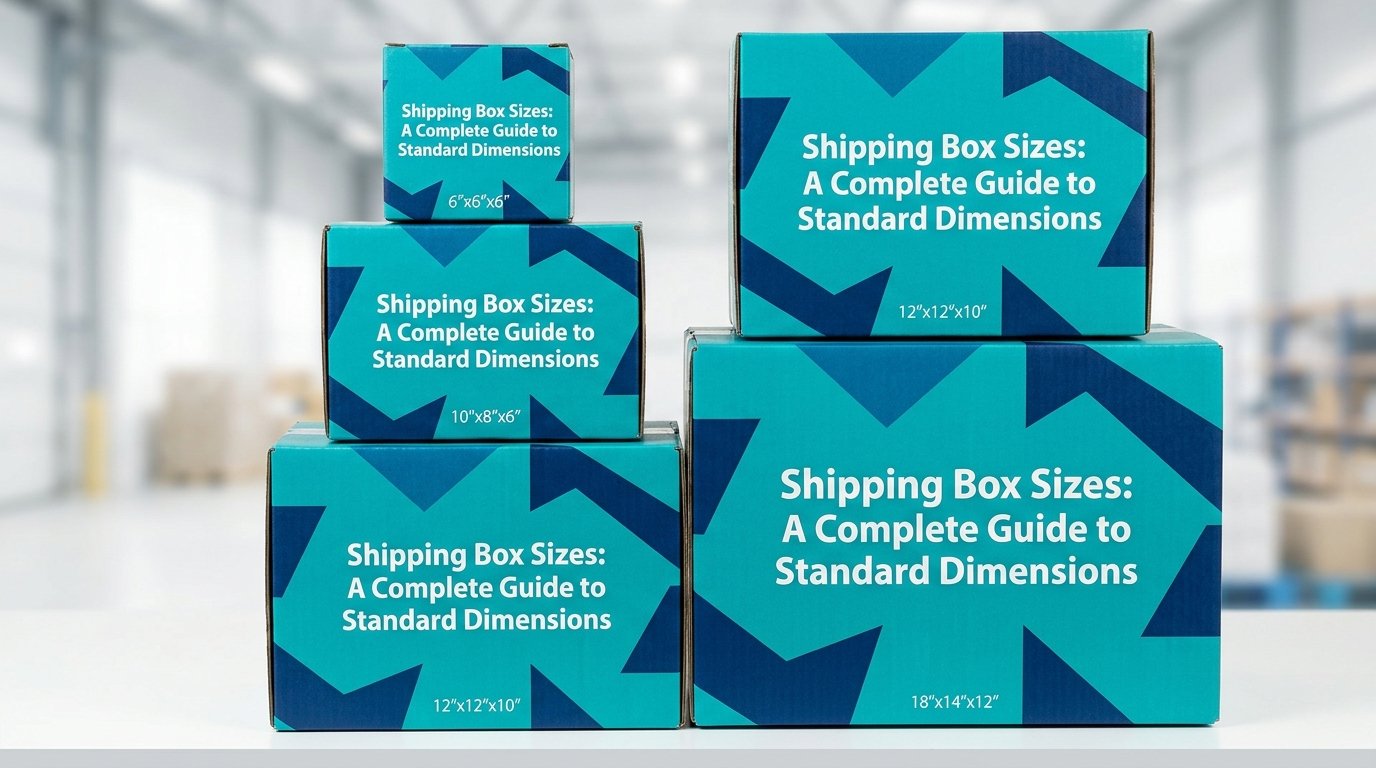
Shipping Box Sizes: A Complete Guide to Standard Dimensions
September 17, 2026 Explore Blogs
Picking the wrong box costs more than most teams realize. Choose one that’s too big, and you’re paying for dimensional weight you didn’t need. Choose one that’s too small, and the product gets crushed, the line slows down, and returns start piling up. Understanding shipping box sizes and knowing which standard box sizes fit which products is one of the simplest ways to control cost, protect inventory, and keep a warehouse running smoothly. This guide breaks down common box sizes for shipping, how they’re categorized, and how to choose the right dimensions for your next order.
Why Box Sizes Matter More Than You Think
A shipping box isn’t just a container; it’s a cost driver, a storage unit, and a layer of protection for whatever’s inside it. Every dimension you choose ripples outward into freight costs, warehouse space, and packing speed. When a box is oversized, carriers often bill based on dimensional weight rather than actual weight, which means you’re paying to ship empty air. When a box is undersized, products shift, corners crush, and the unboxing experience suffers.
This is exactly why so many operations teams standardize on a short list of shipping box sizes rather than ordering custom dimensions for every SKU. A tighter, more predictable size range means pallets build cleaner, shelving stays organized, and new employees at the pack bench spend less time guessing which carton fits which order.
Understanding Standard Box Sizes
Standard box sizes exist because most products fall into a handful of predictable size ranges. Rather than reinventing packaging for every item, most e-commerce and retail operations rely on a defined set of dimensions that cover small, medium, and large shipments.
As a general rule, standard box sizes are listed as inside dimensions, using the format length by width by height. This matters because inside dimensions tell you exactly how much space is available for the product itself, while outside dimensions matter more for pallet building and shipping rate calculations. Always give your packaging supplier the inside measurements your product actually needs so nothing rattles loose or gets jammed in too tight.
Common Box Sizes by Category
Box sizes for shipping typically fall into three broad categories based on the product being packed.
Small Boxes
Small boxes are built for compact items like accessories, cosmetics, small electronics, or single-item orders. A common example in this range is around 8 x 6 x 4 inches, which offers enough interior room for lightweight products and minimal padding without wasting space.
Medium Boxes
Medium boxes cover the widest range of everyday shipments, like apparel, multi-item orders, or moderately sized retail goods. A typical medium box size lands around 12 x 9 x 6 inches, giving enough depth for a few stacked items or a bulkier single product while still qualifying for efficient shipping rates.
Large Boxes
Large boxes are reserved for bulkier or multi-unit shipments, such as bundled orders, larger electronics, or home goods. Dimensions in this category commonly reach 18 x 18 x 16 inches or 24 x 18 x 18 inches, offering the extra volume needed for oversized products without resorting to a fully custom box.
Standard Shipping Box Size Chart
Here’s a quick reference chart for common standard shipping box sizes, listed as inside dimensions in inches:
| Category | Example Dimensions (L x W x H) | Typical Use |
| Small | 8 x 6 x 4 inch | Accessories, cosmetics, small electronics |
| Medium | 12 x 9 x 6 inch | Apparel, multi-item orders, moderate retail goods |
| Large | 18 x 18 x 16 inch | Bundled orders, bulkier products |
| Extra Large | 24 x 18 x 18 inch | Oversized or multiple large items |
Exact measurements can vary slightly between suppliers, so it’s worth confirming dimensions before placing a large order, especially if your product has an unusual shape or fragile components.
How to Choose the Right Box Size
Selecting the correct box size comes down to a few practical steps that apply regardless of what you’re shipping.
Measure the product first, not the box. Start with the exact dimensions of the item, including any padding, inserts, or accessories that ship alongside it. Only after you know the product’s footprint should you match it to the closest standard box size.
Use inside dimensions for fit. Inside measurements tell you whether the product will actually fit with room for protective material, while outside measurements affect how boxes stack, store, and ship. Mixing these up is one of the most common and costly mistakes packaging buyers make.
Account for dimensional weight. Many carriers calculate shipping cost based on a box’s length, width, and height rather than its actual weight. Choosing a snugly fitted box instead of an oversized one can meaningfully lower your per-shipment cost, especially at scale.
Factor in fragility and inserts. Products that need foam, dividers, or extra cushioning require a bit more interior space than the item’s raw dimensions suggest. Building that buffer into your box size choice upfront prevents crushed corners and reduces returns.
Standardize where you can. Sticking to a short list of common box sizes rather than a custom size for every SKU speeds up packing, simplifies storage, and makes it easier to train new team members on the pack bench.
Final Thoughts
Getting shipping box sizes right isn’t just a packaging detail; it’s a direct lever on cost, protection, and customer experience. By understanding standard box sizes, matching inside dimensions to your product, and accounting for dimensional weight, you can cut waste, reduce damage, and keep your fulfillment process running smoothly.
Ready to simplify your packaging strategy? Customprintedpaper helps U.S. brands match every SKU to the right box size with free design support, eco-friendly materials, and fast turnaround. Get in touch with Customprintedpaper today and ship smarter.
Also read: Length, Width, Height Dimensions: The Complete Guide to Measuring Boxes Correctly