



How Custom Tuck Boxes Can Boost Your Business
October 29, 2026 Explore Blogs
The box is the first part of your product a customer touches. A generic carton holds the contents, but it tells the buyer nothing about who made them.
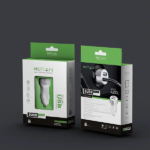
That is where custom tuck boxes come in. A tuck box is a folding carton whose end flaps tuck into the body to close it, with no glue at the closing stage and no tape. You choose the size, board, artwork and finish, so the carton suits the product inside. This guide covers the benefits of custom tuck box packaging for Australian businesses: recognition, presentation, fit, packing efficiency, cost and recyclability.
Online shopping makes the box matter more. Australians spent a record $82.6 billion online in 2025, up 14% on the previous year, according to the Australia Post eCommerce Report 2026. That figure does not prove that a tuck box lifts sales. It does show how many products now reach customers in a box someone chose.
Build Stronger Brand Recognition
Recognition comes from repetition. When the same logo, colours and typography appear on every carton, buyers begin to identify your product before they read the label.
Custom printed tuck boxes let you place artwork on every panel, including the flaps and the inside. Tuck boxes with logo printing on the front panel keep your name visible whichever way the box is stacked.
Print method affects colour. CMYK reproduces full-colour artwork and photographs. Pantone matching reproduces one fixed brand colour consistently from batch to batch. Ask your printer which suits your artwork, and check the proof before you approve production.
Restraint helps too. A clear logo, a legible product name and the few details a buyer needs will do more than a crowded layout. Apply the same artwork rules across all your custom printed packaging so the range looks related.
Improve Product Presentation
A tuck box presents a product in a clean, structured carton that looks the same on a shelf, in a parcel and in a customer’s hands. Finishes then set the tone.
A matte finish reads as subdued, which suits skincare. Gloss makes saturated colours stand out. Foil stamping adds a metallic accent to a logo, and spot UV highlights one detail, such as a product name, against a matte background. Pick one or two finishes so the box looks deliberate rather than busy.
For custom retail packaging, structure matters as much as print. A well-fitted printed tuck end box closes firmly and sits square on a shelf. Straight edges and sharp printed lines are what customers notice first.
Choose Packaging That Fits Your Product
A tuck box protects a product only when its internal size matches the product. Too much space lets the item shift. Too little strains the flaps and bends the board.
Here is a worked example. Say a soap bar measures 90 × 60 × 25 mm. The carton’s internal dimensions must be slightly larger than those figures, and the exact allowance depends on the board thickness and the way the carton folds. Your supplier should confirm it, ideally with a printed sample, before production starts. If the product is a bottle or jar, a die-cut paperboard insert can hold it upright and stop it rattling.
Be realistic about limits. Cardboard tuck boxes suit lightweight products that are not very fragile. They are retail packaging, not a shipping carton, so a parcel should travel in a strong outer carton with the tuck box inside. For heavier or outer packaging, see our custom Food packaging boxes.
Support More Efficient Packaging Operations
Folding carton packaging is delivered flat and folded at the packing bench, so you store flat sheets rather than assembled boxes. Your packers fold the carton, place the product and tuck the flaps. Because the tuck is the closure, the box itself needs no tape.
Standardising on one or two carton sizes across a product range also cuts the number of different items you reorder and store. That is a practical gain for a small team with limited space.
Select the Right Tuck Box Style and Material
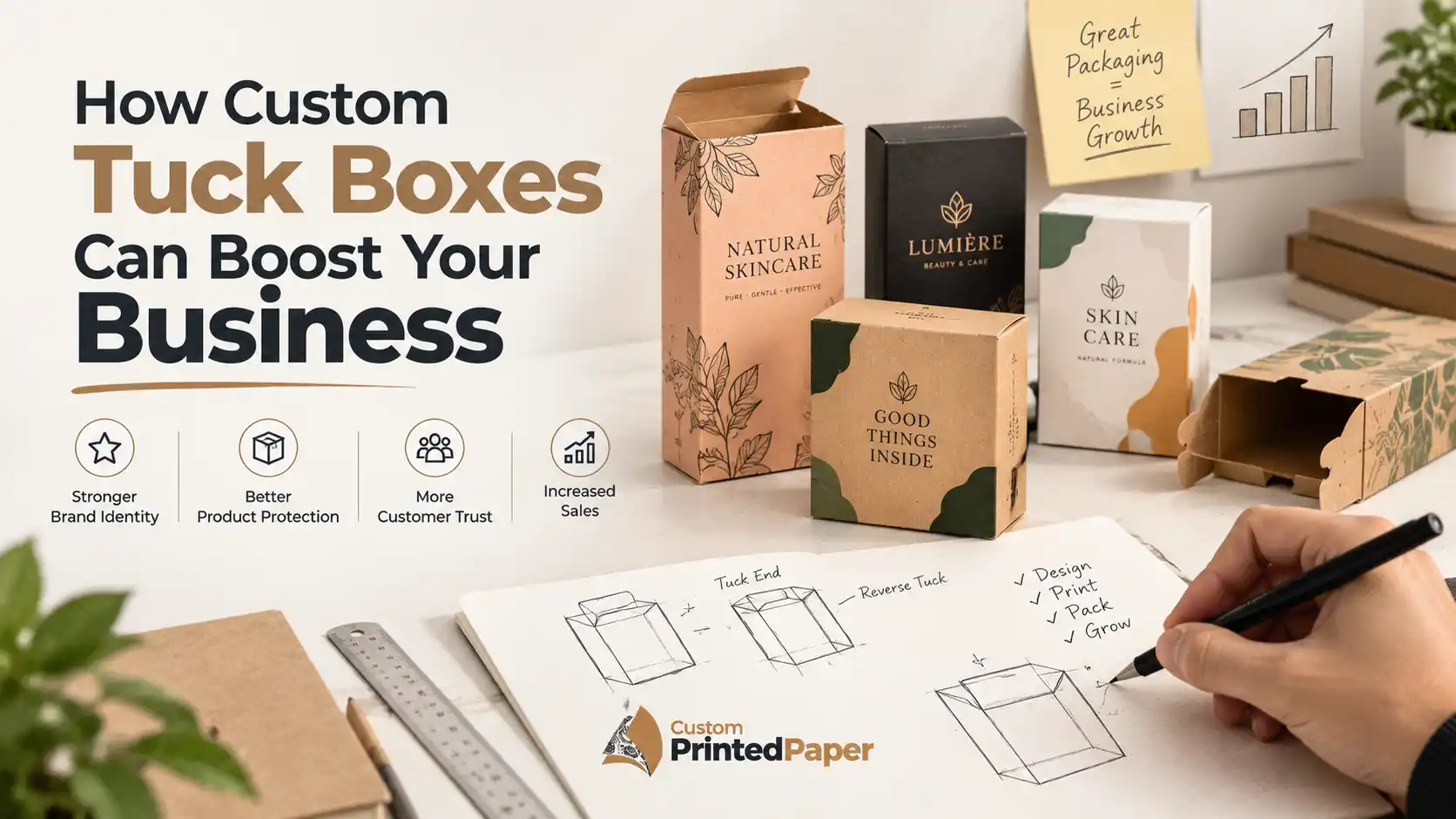
A straight tuck box has its top and bottom flaps opening on the same side, so the carton opens from one direction. A reverse tuck box has the flaps opening on opposite sides. Straight tuck suits products packed and displayed from one side. Reverse tuck suits products packed from either end.
Material then sets the look and strength. Coated paperboard gives a smooth surface for sharp full-colour printing. Kraft board has a natural brown finish that suits handmade or earthy brands. Thicker board adds stiffness for heavier products. To compare styles side by side, browse our custom tuck boxes.
Use this checklist before you choose:
- Measure the product’s length, width and height, and note its weight.
- Decide which side faces forward on display and how the customer should open the box.
- Match the board grade to the product’s weight and your print style.
- Pick one or two finishes that fit your brand’s positioning.
- Request a printed sample and test the fit before approving a full run.
Understand Costs and Sustainability
Five factors shape the price: carton size, board type, print method, finishes and order quantity. Quantity matters because setup costs are fixed. As a hypothetical illustration only, a $300 setup charge adds $0.60 to each box on a 500-box order but only $0.15 on a 2,000-box order. Real figures will differ, so request quotes at two or three quantities and compare both unit and total cost. This is the question that matters most for custom tuck boxes for small businesses: what a realistic first order costs, not what the cheapest unit price is.
Paperboard is a good starting material, but details decide recyclability. The Australian Packaging Covenant Organisation (APCO) reports that 94% of paper and paperboard packaging placed on the Australian market has good recycling potential, yet only 66% was recovered in 2023–24. That is national data for all paper and paperboard packaging, not a measure of any one box. It does show that design and disposal both matter.
Coatings, laminations, foils, adhesives and plastic windows can change whether a carton is recycled. Check the finished box with your supplier and your local council before calling it recyclable. The ACCC’s guidance on environmental claims says claims must be accurate and supported by evidence, so avoid broad labels such as “eco-friendly” unless you can back them up.
Frequently Asked Questions
What are custom tuck boxes used for?
They package small, lightweight retail goods such as cosmetics, soap, jewellery and accessories. Size, weight and fragility decide whether a tuck box is enough or needs an outer carton.
How can custom tuck boxes benefit a business?
They carry consistent branding, give products a finished look and let you size packaging to each product. Their value depends on fit, material, quantity and how you use them.
What is the difference between straight tuck and reverse tuck boxes?
It is the side the end flaps open on. Straight tuck flaps open on the same side, and reverse tuck flaps open on opposite sides.
Can custom tuck boxes be printed with a logo?
Yes. Depending on the printer, you can print logos, brand colours, product details and other artwork on the box.
Are tuck boxes recyclable in Australia?
Paperboard boxes often can be, but coatings, adhesives and added parts can change that. Check the finished carton rather than assuming it will be accepted.
How do I choose the right tuck box size?
Measure the product, allow for any insert, and have your supplier confirm the internal dimensions before you approve production.
Conclusion
Custom tuck boxes can make your brand easier to recognise, give products a finished look, protect lightweight items and simplify packing. They work best when the carton is chosen for the product, not by habit.
Before you ask for a quote, gather these six details:
- Product dimensions and weight
- Preferred tuck style and board
- Finish requirements
- Estimated order quantity
- Artwork or logo files
- Delivery location and required date
Then explore custom boxes in Australia and talk to our team about your requirements.